Will Algae Growth Caued Fresh Drinking to Taste Funny
Just as a healthy diet of nutrient-rich food helps a child "grow like a weed," nutrient-rich water helps weeds and algae abound… like weeds!
In its purest state, h2o contains no nutrients. And yet, our bodies rely on it.
Virtually oftentimes, the water nosotros drink (from the tap, bottled water or well h2o) contains some combination of dissolved minerals: iron, zinc, copper, iodine, calcium, phosphorus, magnesium, fluoride, sodium, potassium and chloride, to proper name a few. Many other substances can be dissolved in water, though, making information technology a carrier for all kinds of nutrients.
In freshwater lakes, two types of nutrients y'all've probably heard almost are phosphorus and nitrogen . Phosphorus is vital for plants and therefore a primary ingredient in most fertilizers. Information technology's also the most influential nutrient in freshwater aquatic ecosystems. Nitrogen typically takes the form of a gas that has no taste, color or smell. While it makes up 78% of the earth'southward atmosphere, sure forms of it can also be constitute in soil and in water. Information technology's also an important nutrient for aquatic life.
But here's the problem: too much phosphorus and nitrogen tin cause aquatic weeds and algae to grow excessively .
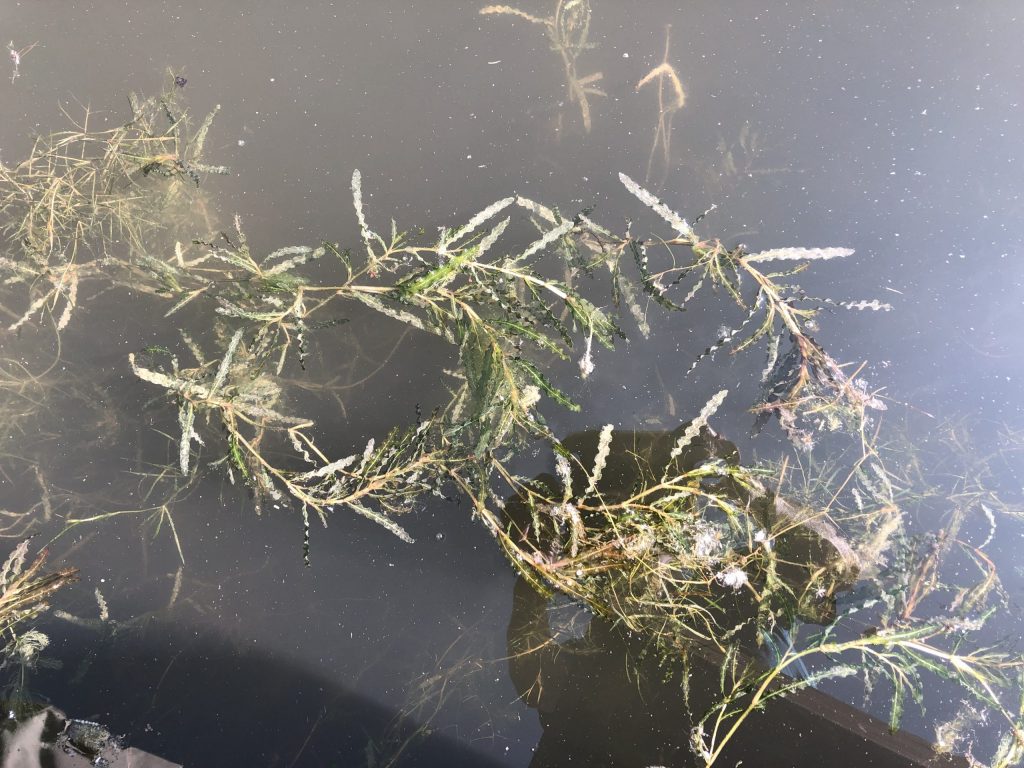
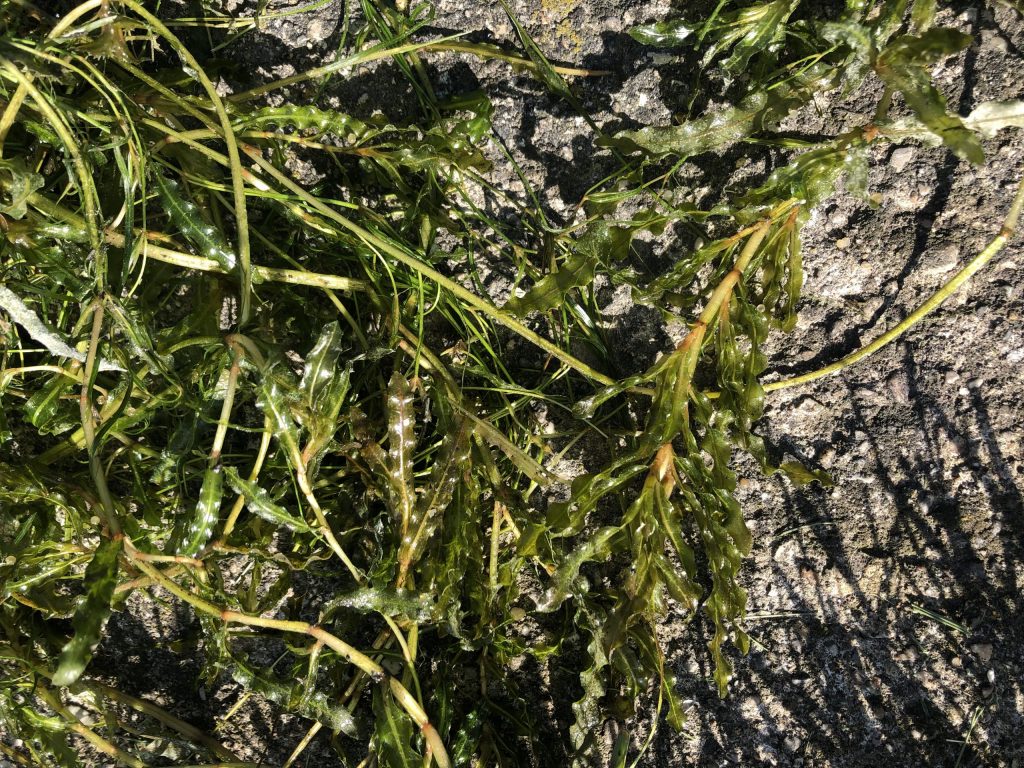
You lot might have seen weeds like this near your shoreline! Curlyleaf pondweed can quickly take over other aquatic species and form a dense mat on the surface of the h2o. (Photos provided by Karen Cripe on Winona Lake.)
Why are dissolved nutrients a problem?
When phosphorus and nitrogen are introduced into lakes in large amounts , weeds and algae can become out of residuum with other plants and animals. They quickly absorb food-rich water and use information technology to produce more weeds and algae. Then they overwhelm wildlife habitats, stifle native species and block sunlight from entering the lake.
Oftentimes, algae blooms that happen in early summertime are a result of excess nutrients.
Leap rain washes materials that hold phosphorus and nitrogen into waterways. In one case in a lake, the nutrients are "eaten" by algae. As soon equally the weather warms upward and algae become an influx of sunshine, they apace bloom near shorelines (that's where the water is warmest, typically).
At that place are many possible variations, but in full general, this bicycle (rise temperatures + nutrients = growth) repeats throughout the warmer months. Sometimes, in the right conditions, it can happen in winter!
How do nutrients get into the lakes?
There are two master ways nutrients finish upwards in lakes: external and internal loading .
Stormwater can wash organic and inorganic materials off crops, lawns and landscaping, construction sites and from any paved surface. Flooding has a similar effect, washing nutrients (oftentimes in the form of eroded soil) from the banks of rivers, streams and lakes back into nearby bodies of water. Nutrients that enter streams or rivers are then carried into and out of lakes.
Food-rich water tin can as well be absorbed into the footing. In this case, plants help purify the water by stripping it of nutrients like phosphorus and nitrogen.
Within lakes, as plants and other organic fabric decay, nutrients are besides being produced and released. You could say that these nutrients are developed "in-business firm."
Internal and external nutrient loading is expected – even good, in moderation! But when lakes age quickly, it's often because they get a frequent influx of nutrients from the state around them.
How does a lake age?
Eutrophication (the tertiary console in the gallery above) happens when a lake or pond becomes overly enriched. That leads to excessive weed and algae growth and the buildup of muck at the bottom of the lake. Gradually, the lake or pond "fills in" and eventually becomes a wetland.
Eutrophication is natural and will happen to all bodies of water over time – but humans can speed information technology upwardly or slow it down.
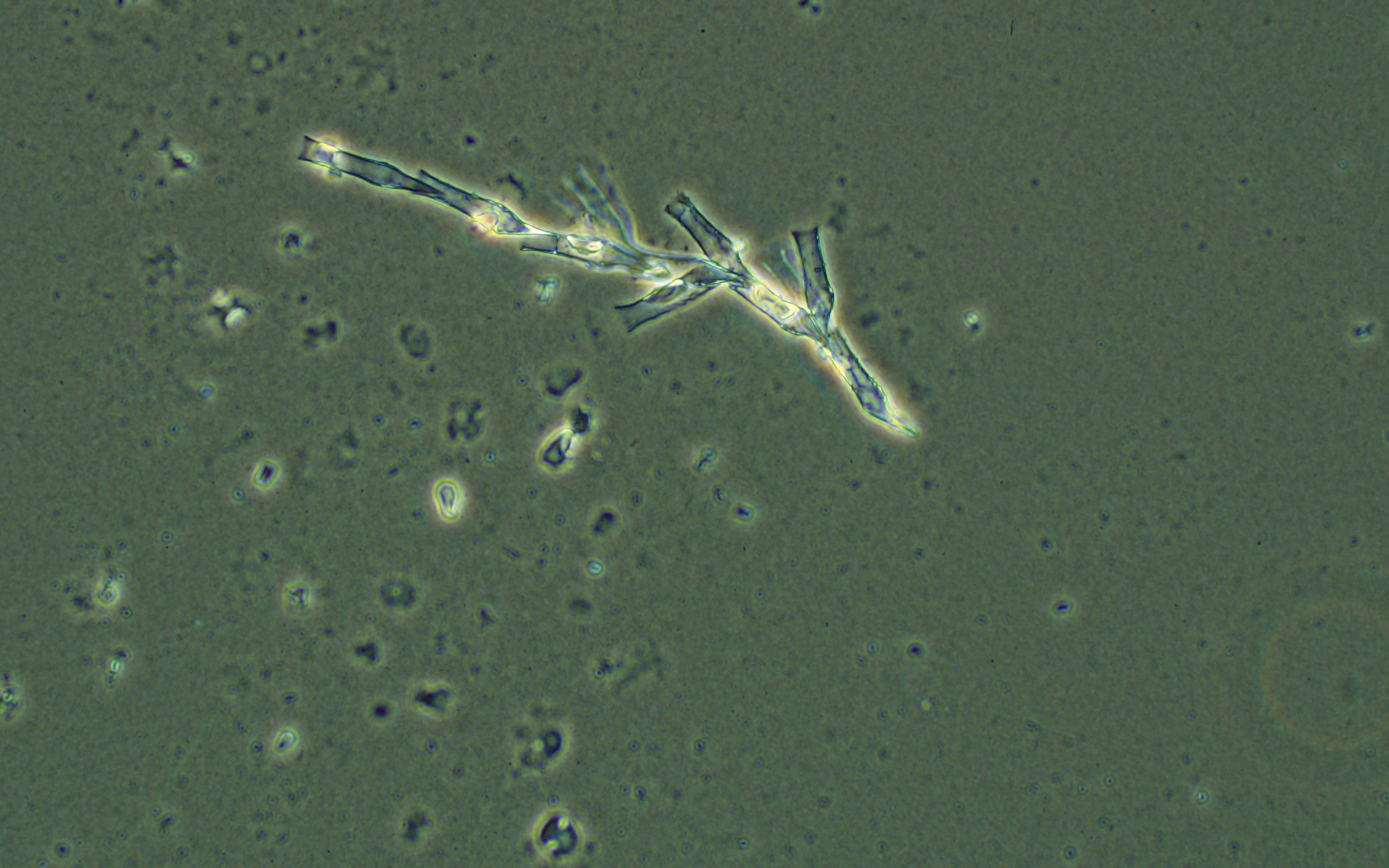
What happens when algae dice?
"When the algae die, they are decomposed by leaner. This process consumes the oxygen dissolved in the water and needed past fish and other aquatic life to 'breathe'. If enough oxygen is removed, the water can become hypoxic, where there is not enough oxygen to sustain life, creating a 'dead zone'."
Learn more from the USGS
How can we keep excessive nutrients out of the water?
Hither are a few ways to prevent excess nutrients from causing weeds to grow, algae to flower, and your lake to speedily age:
- Just fertilize when y'all demand to. Lawn and garden fertilizer is a common culprit of likewise much phosphorus and nitrogen. When it rains, any fertilizer that isn't captivated into the soil will wash away. Consider using fertilizer without phosphorus.
- Pick upwardly after pets and properly dispose of yard waste. Did y'all know that when grass clippings, fallen leaves and branches break down, they release nutrients? Never get rid of m or pet waste matter by dumping information technology into a lake, stream or river.
- Exist mindful of your lake – and become to know your neighbors! Ane of the all-time ways to go on local lakes healthy is simply to know more near them. As you and your neighbors capeesh the lakes, you lot'll be more probable to take intendance of them in the futurity.
Information technology's important to think that while nutrients can enter a lake, they also already exist inside information technology!
Ultimately, it'southward impossible to have an absolutely clean and articulate lake. And you probably wouldn't desire one! Many aspects of lake life, including fishing; turtle, frog and crayfish hunting; and birdwatching rely on a healthy aquatic environment that isn't perfectly free of nutrients. Phosphorus and nitrogen (in the right amounts) are vital for life.
If our community continues to treat the lakes by being mindful of what enters them, local waterways will exist enjoyed long into the future.
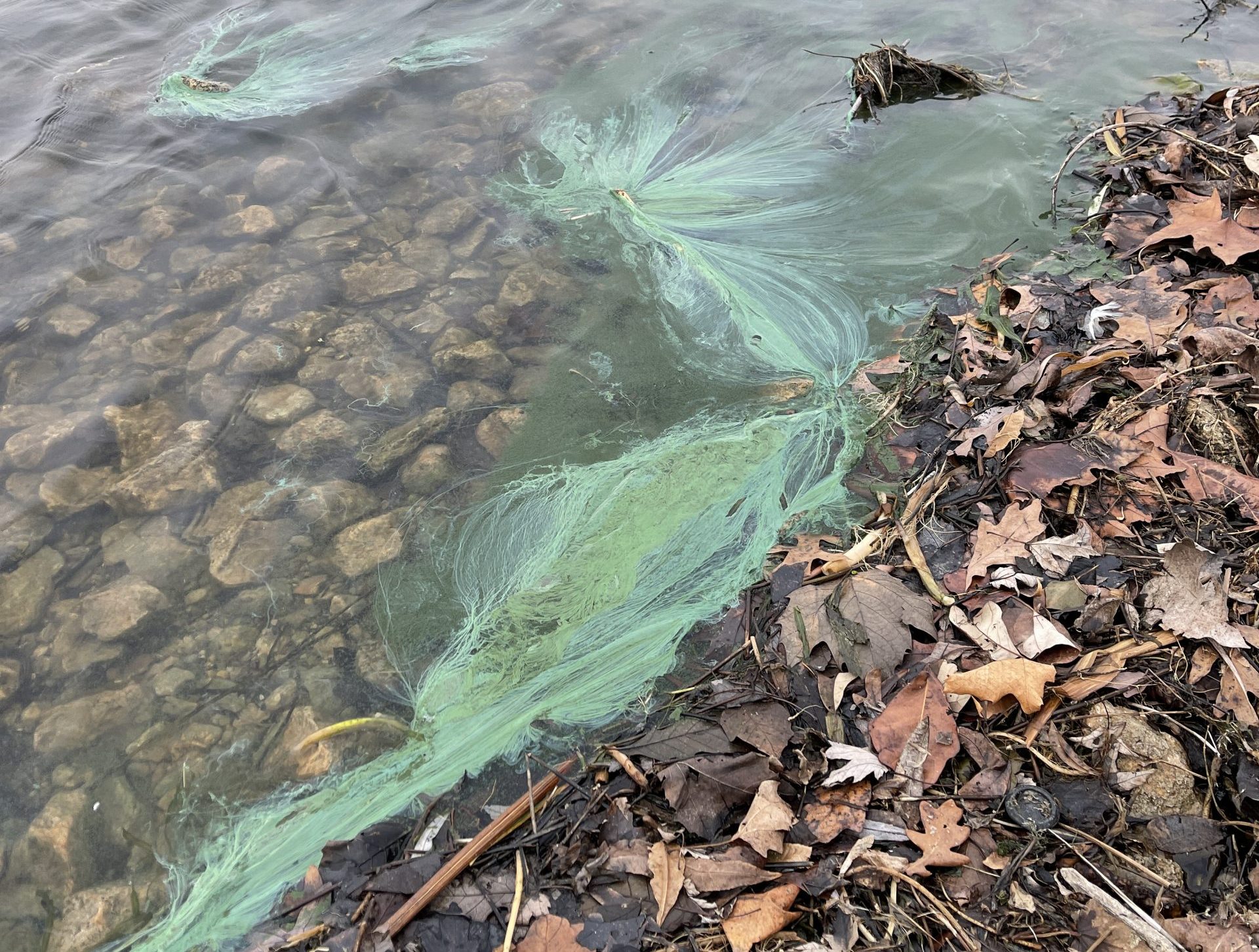
Bonus question: Are blue-greenish algae blooms triggered by nutrients?
Blue-green algae is a type of bacteria, but it behaves similar other algae, absorbing nutrients and using them to bloom. Unlike harmless green algae, blue-green algae tin produce a toxin called microcystin. Past limiting nutrients in our lakes, we tin can also requite blue-greenish algae fewer opportunities to bloom.
Acquire more than
Source: https://lakes.grace.edu/nutrients-in-water/
0 Response to "Will Algae Growth Caued Fresh Drinking to Taste Funny"
Post a Comment